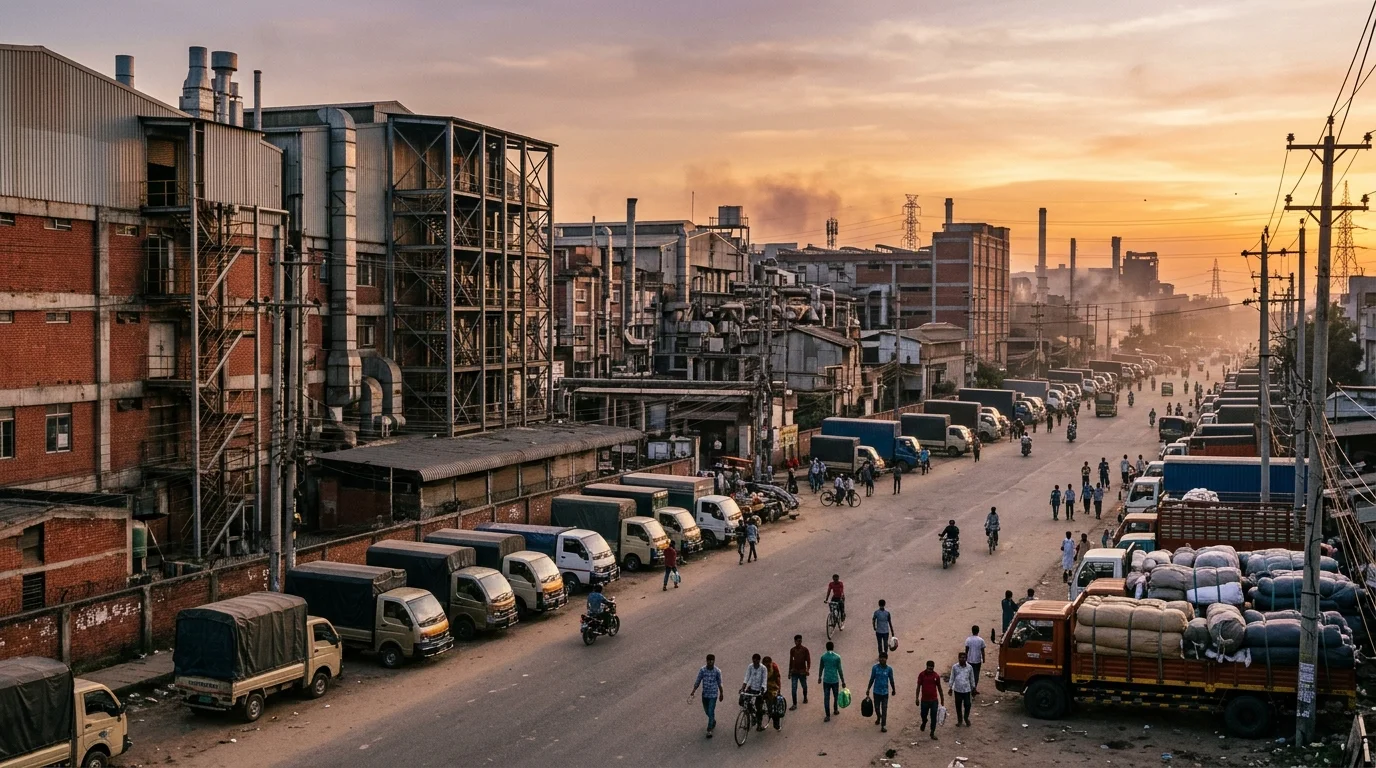
GAZIPUR, Bangladesh — Operations across prominent industrial clusters in Gazipur ground to an abrupt halt on Monday as thousands of ready-made garment (RMG) laborers staged demonstrations demanding an upward revision of the national minimum wage to Tk 30,000 per month.
Protesting workers from factory zones across Konabari, Kaliakair, Chandra, and Naojor converged onto the Dhaka-Tangail national highway, erecting temporary roadblocks and halting freight transit. Responding to escalating friction and isolated brick-throwing, Industrial Police and paramilitary units utilized tear gas canisters and sound grenades to disperse picketers and restore traffic circulation.
Factory Suspensions Under Labor Code
Fearing property damage and equipment disruption, management at 17 manufacturing complexes invoked Section 13(1) of the Bangladesh Labor Act—enforcing "no work, no pay" indefinite closures. An additional 27 manufacturing units declared emergency day-long operational holidays to defuse volatility.
"The steep escalation in everyday commodity costs, food inflation, and house rents makes our current baseline salary unsustainable. We are demanding a living wage of Tk 30,000 to maintain dignified subsistence," a garment labor organizer declared during highway demonstrations.
Tripartite Consultations Underway
Leadership from the Bangladesh Garment Manufacturers and Exporters Association (BGMEA) alongside Ministry of Labor representatives convened an emergency tripartite mediation committee to review worker grievances. Exporters underscored that while inflationary pressures are acute, international retail buyers must correspondingly increase order sourcing prices to sustain wage increments without eroding global market competitiveness.
Industrial Police-2 authorities confirmed that patrol detachments will maintain stationary cordons along industrial zones overnight, facilitating calm as negotiations between labor delegations and factory management proceed.
No comments yet. Be the first to share your thoughts!